
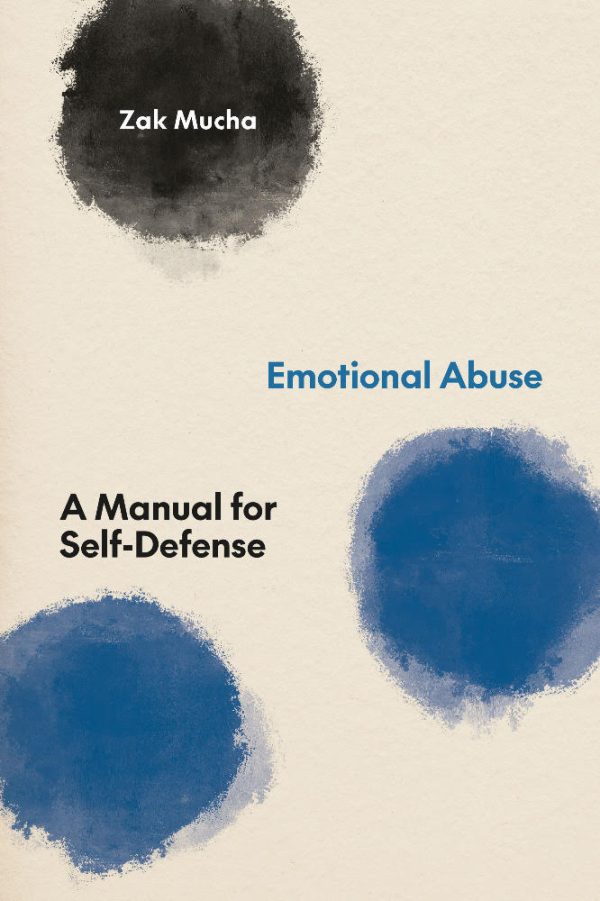
Emotional Abuse: A Manual for Self-Defense by Zak Mucha


Description
“Bullies are enabled by silence and silenced by spoken truth.”
“… there is no real difference between physical, sexual, and emotional abuse. All that distinguishes one from another is the abuser’s choice of weapon.”
– Andrew Vachss.
We have been socialized to believe emotional abuse is not serious. We have been taught emotional abuse itself is nothing more than “hurt feelings” and there is no “real” evidence other than the victim’s complaints. And if the only evidence is the victim’s complaints, we wrongly justify, there is no way to verify whether a person was “actually hurt.” The victim of emotional abuse is dismissed precisely because he or she cannot “prove” their feelings. Emotional abuse creates a vicious dynamic where the victim is taught his or her feelings do not count and any pain suffered is, somehow, their own fault.
Like any other abuse, emotional abuse is about power. Whoever can define reality has the ultimate power. In emotional abuse, the aggressor attempts to define reality with statements like, “You’re too sensitive,” and “I couldn’t help it. You made me mad.” Each statement is an attempt to shape how another person perceives reality.
Emotional abuse teaches us to blame ourselves for being hurt. We learn to redefine ourselves in the hopes that we do not get attacked again. In redefining ourselves we retreat to new, constricted boundaries — where we can go, what we can say, and how we “should” feel. We do this in an effort to avoid pain. When we cannot escape emotional pain, we try to tell ourselves, “It’s not that bad.” We minimize our own pain, criticizing ourselves for being hurt. We imitate and incorporate the aggressor’s accusations, repeating the same things they told us about ourselves and the world. The abuser will present layers of excuses and justifications while the unstated truth continues to be, “I will continue doing this as long as there is no cost.”
This book is about self-defense, not theory. Our lives depend on our willingness to identify the boundaries marking who we are and the criteria we desire for relationships. Emotional abuse creates a vicious dynamic where the victim is taught his or her feelings do not count and any pain suffered is, somehow, their own fault. This damage can radiate throughout every aspect of life.
Reviews
This book is both terrifying and hopeful…
Zak Mucha’s words are dangerous to abusers, because his words mean things, and they name things. They name and describe the mechanisms of emotional abuse, and in doing so they provide weapons of self-defense and methods of liberation.
While Zak Mucha’s explanation of the harms of emotional abuse is useful, it pales in comparison to his wisdom in teaching us emotional self-defense. Learning to protect ourselves from emotional abuse changes everything.